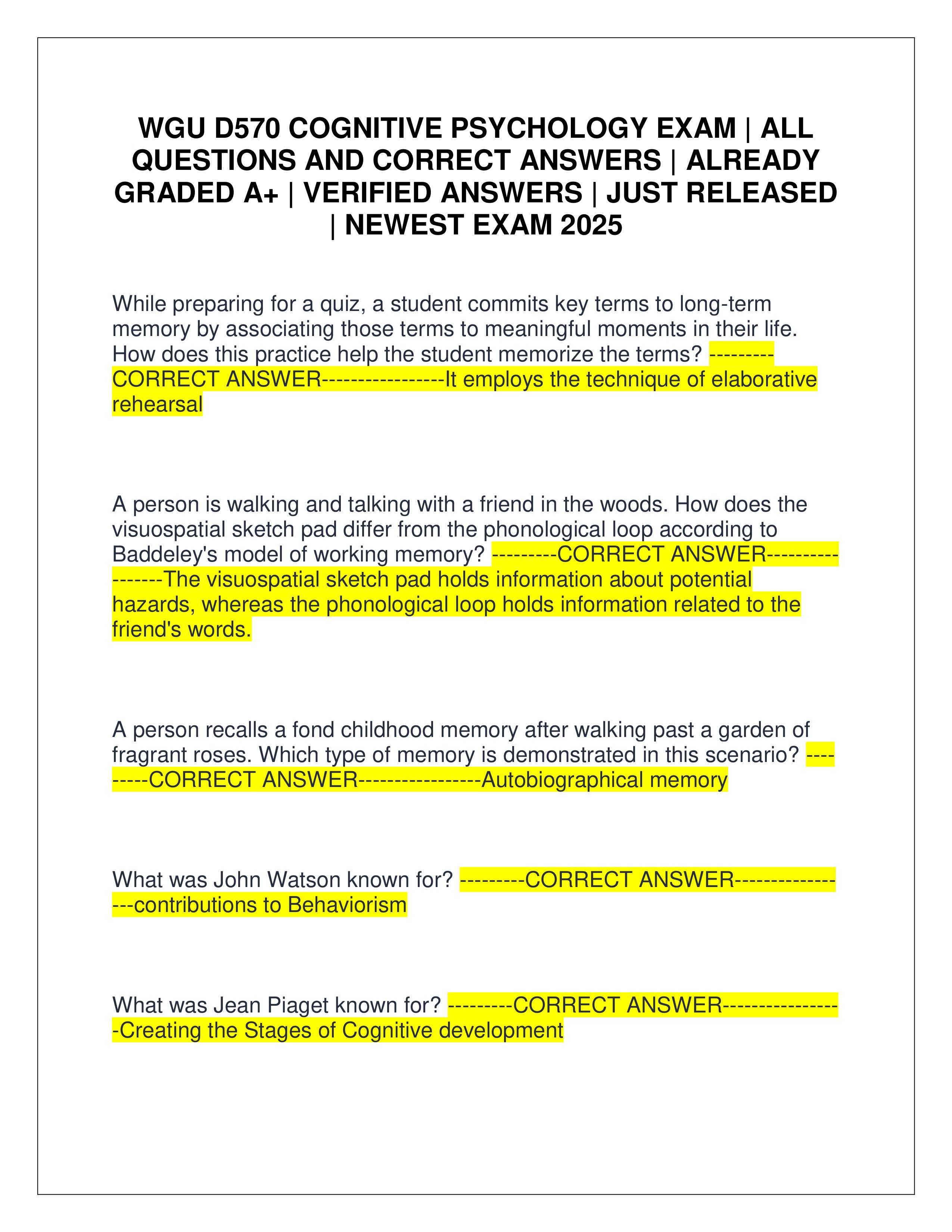
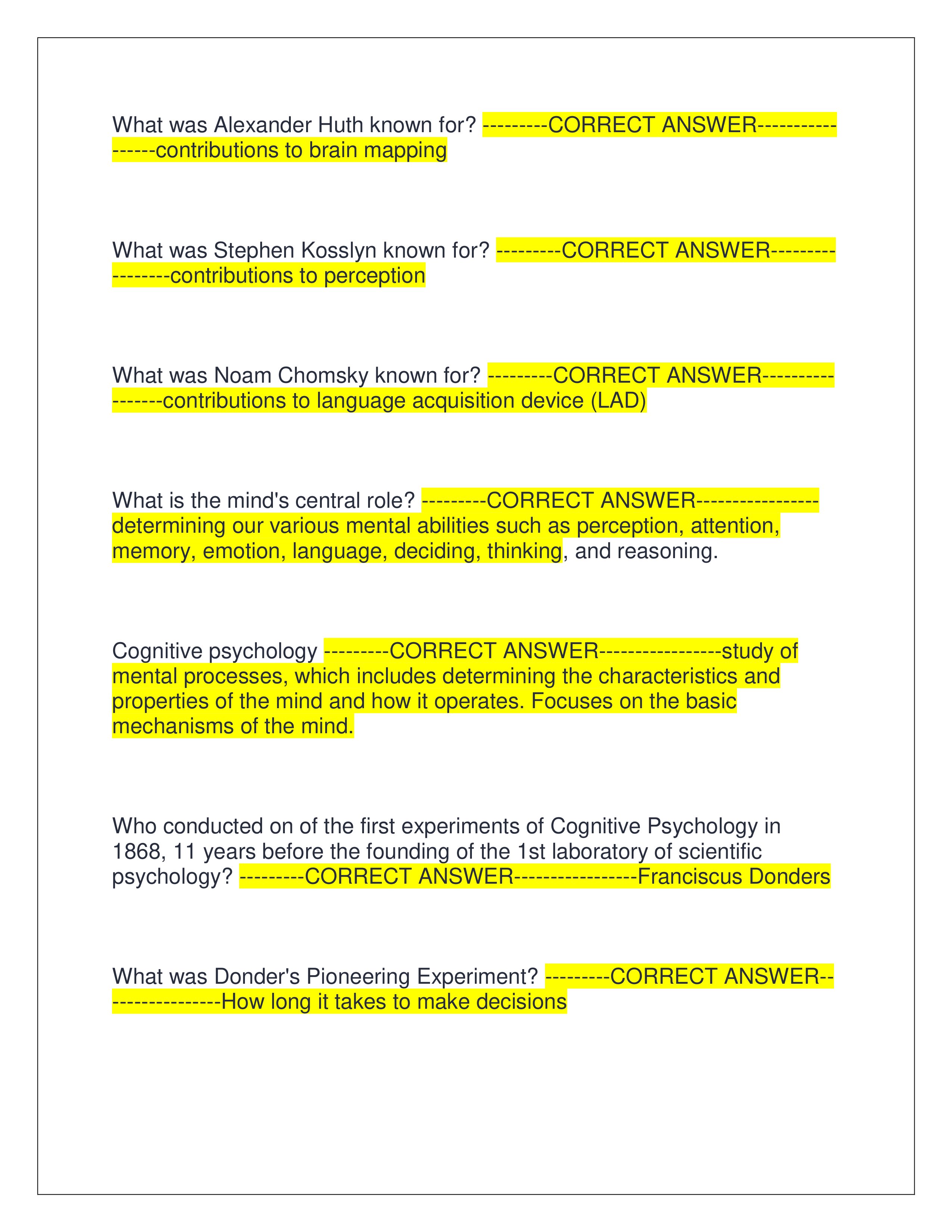
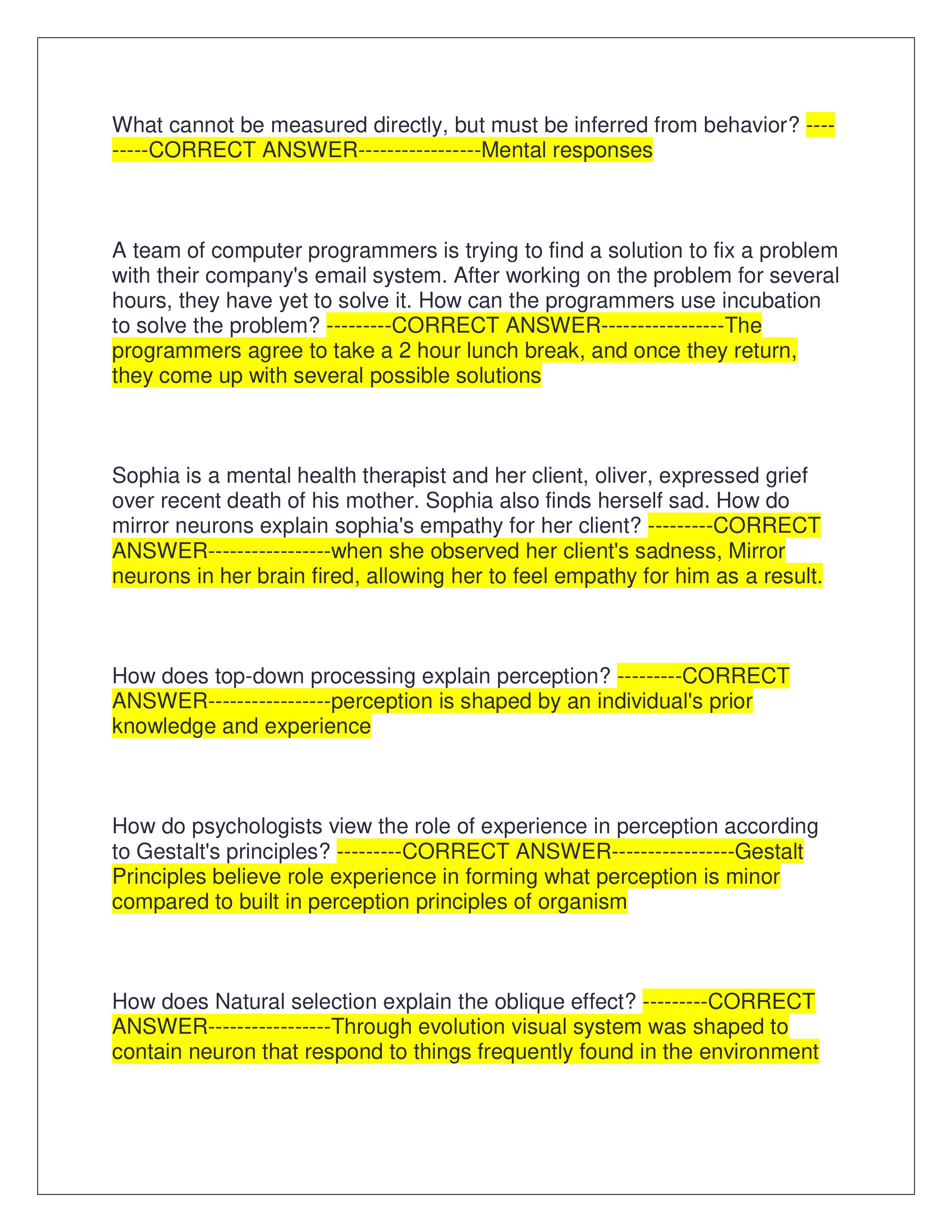
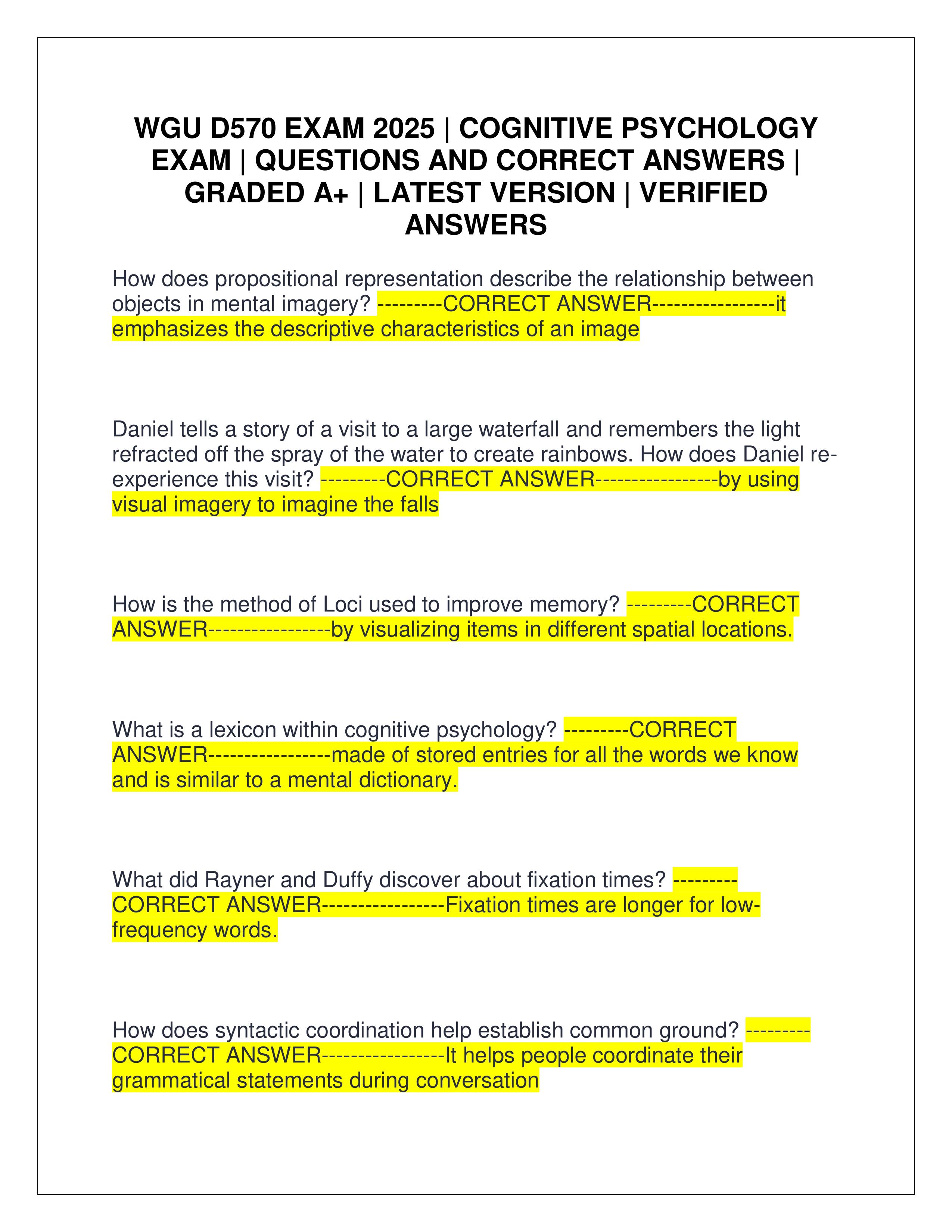
This comprehensive document provides a detailed overview of the WGU D570 Cognitive Psychology Exam, offering students a clear understanding of what to expect from this exam. It features a collection of questions along with verified correct answers, making it an invaluable resource for students aiming to excel in cognitive psychology. The document covers a wide range of topics crucial for mastering the subject, including memory techniques, working memory models, and notable contributions from key figures in psychology.
For instance, students will learn about the technique of elaborative rehearsal for committing key terms to long-term memory, as well as the distinction between the visuospatial sketch pad and the phonological loop in Baddeley's model of working memory. The document also delves into autobiographical memory, providing an example of how sensory experiences can trigger past memories.
Furthermore, it highlights the importance of understanding cognitive development stages as established by Jean Piaget and explains the contributions of John Watson to behaviorism. The exam material also explores problem-solving strategies, such as Newell and Simon's approach, and how problem statements can influence effective solutions.
Students will find practical examples demonstrating the interaction between episodic and personal semantic memories, as well as an exploration of concepts like expert-induced amnesia, priming, and the levels of processing theory. The document emphasizes techniques for encoding information into long-term memory, such as associating song lyrics with familiar poems. Overall, this guide is an essential tool for students preparing for the WGU D570 Cognitive Psychology Exam, aiming to achieve top grades.